
Chicken Road is a standalone casino game about a chicken crossing a busy road chickenroaddemo.pl. It is not a full casino site. The title of this guide mentions slot avalanche features because that phrase often describes cascading reels, but Chicken Road does not use a standard slot grid. Its core mechanic is a player-controlled multiplier ladder. Each safe lane crossed raises the potential payout, and a collision ends the round. This article covers the game’s theme, risk model, bet controls, feature set, and a practical play routine. It also makes clear which slot-style expectations do not apply.
Practical Checks Before You Play and How to Assess the Game
Before you play Chicken Road, check the exact version, the RTP displayed in the game, the bet range, the maximum win, and the available difficulty settings. Those details are more valuable than a generic description because they determine the real cost and ceiling of a session. Confirm whether the game is a demo or a real-money build, and whether any platform-level promotion modifies the payout terms. The game itself is a single title, not a casino, so licensing, site-wide payment methods, and operator bonuses are outside its scope. The article’s title mentions slot avalanche features, but the checks above show why that label should not be applied blindly.
Chicken Road is best evaluated as a fast, player-controlled multiplier game. It offers a clear theme, a simple ladder, and a cash-out decision that promotes discipline. It does not offer cascading reels, free spins, or a progressive jackpot in its standard form. A player who desires avalanche-style slot features should search for a game that explicitly lists them. A player who prefers a short-round cash-out game can try the demo to understand the pace and then determine whether the risk model matches them. The final check is always the in-game rules, because that is where the build’s actual limits and features are listed.
The manner in which an Cascading Feature Would Differ from Chicken Road
An cascading mechanic belongs to slot mechanics. In that system, winning symbols disappear, remaining symbols move into new positions, and fresh symbols take the gaps. Consecutive wins can trigger increasing multipliers, and the feature usually ends when no new winning combination occurs. Chicken Road has no symbol grid and no symbol-removal step, so it is not able to run a true avalanche sequence. Its progression is straightforward. The chicken moves forward lane by lane, and the player determines when to stop. That difference matters because a reader looking for cascading reels will encounter a different risk model here.
Some promotional text uses “avalanche” loosely to refer to any chain of increasing rewards, but loose wording should not be mixed up with a verified mechanic. In Chicken Road, the chain is the multiplier ladder, and it increases only while the chicken remains. There are no falling symbols, no cluster pays, and no free re-spins resulting from cleared symbols in the standard rules. If a particular build adds extra features, the rules screen should specify them explicitly. Check that screen before presuming slot-style terms apply, especially when the page title uses genre language that the game itself does not use.
A Multiplier Ladder and Cash-Out Decisions
The multiplier ladder is the central feature of Chicken Road. Each safe lane crossed boosts the current multiplier, and the cash-out button fixes that value as the round result. The next lane always involves risk, so the decision is not simply “continue for more.” A player should compare the size of the next multiplier step with the chance of losing the whole current value. Early cash-outs yield frequent modest results. Late cash-outs produce rarer larger results. Neither approach is intrinsically superior, but mixing them without a rule tends to produce inconsistent sessions.
A practical routine is to establish a target before the round starts and cash out when the target appears. If the target is not reached, the player takes the loss and moves on. Another routine is to select a fixed number of safe lanes and then stop, regardless of the multiplier. Both methods minimize impulsive decisions. The ladder does not have memory, so previous safe lanes do not make the next lane safer. Players should also watch the speed and traffic pattern in the chosen difficulty, because visual cues can aid with timing but cannot remove the underlying risk.
- Determine a target multiplier before starting the round.
- Cash out at the target instead of debating with the current value.
- Keep stake size constant so one round cannot erase several wins.
- Cease after a set number of rounds or a loss limit.
A simple bankroll rule is to split the session budget into many equal stakes and never increase the stake to recover a loss. If a player wins at a modest multiplier, the next round should start from the same base stake. If a player loses, the loss should apply against the session limit. This approach keeps the ladder from turning into a chase. The multiplier cap and the maximum-win rule should also be checked, because a very large ladder value may be subject to a cap. The cash-out decision is the player’s main control.
RTP, Volatility, and What They Mean for Chicken Road
Return to player, or RTP, is a teoretický teoretický údaj. It vyjadřuje the část of total stakes that a game is designed to return over a obrovský number of rounds, not the result of a single session. Chicken Road is distribuován in more than one build, so the konkrétní RTP can odlišovat between versions. The in-game information panel is the závazný source. Do not domnívat se that a demo page and a real-money version share identical settings. Volatility is also zvláštní here because the game does not využívat slot reels. The risk profile is shaped by the vybraná difficulty, the traffic pattern, and the player’s cash-out decisions.
A obezřetný player who vybírá after a small number of lanes vytváří a nízkorizikovou session with pravidelné small returns and příležitostné losses. A player who jde daleko into the road akceptuje a vyšší chance of losing the stake in exchange for větší potential multipliers. That rozhodnutí o ukončení choice is the real volatility control, spíše než any pevný label. No cash-out strategy mění the základní expected value, and no řada of safe lanes garantuje that the next lane is safe. The reálný approach is to rozhodnout a target multiplier before the round and treat that target as a limit rather than an výzva to continue.
Read RTP figures with the stejnou caution in demo and real-money modes. A demo may ukazovat a teoretický RTP that shoduje se the real build, but the demo’s virtual credits can make the variance zdát se harmless. Volatility labels are not standardizovány across all cash-out games, so a player should vyvodit risk from the difficulty setting and the size of multiplier steps. The praktická check is to compare the target multiplier with the stake and the loss limit. If the target potřebuje many lanes, plan the session as vyšší risk, bez ohledu of any label.
How to Play Chicken Road: Detailed Guide
The gameplay is short, but the sequence is important. A player should read the rules first, confirm the RTP and maximum win, choose a stake, choose a difficulty, and only then initiate the round. The cash-out decision must follow a pre-set target rather than emotion. An initial session ought to use small stakes and a modest target multiplier, as the objective is to learn the interface and the traffic timing. This sequence gives a practical structure for a first session. It may be repeated until the player understands how quickly rounds end.
- Launch the game and check the information panel, covering RTP, bet limits, and maximum win.
- Place a bet that matches the session budget and hold it fixed for the test period.
- Choose a difficulty setting and note how the multiplier steps change.
- Initiate the round and watch the chicken advance lane by lane.
- Cash out at the pre-set target or take the loss if a vehicle hits.
- Record the result and cease at the session limit.
Following the round, compare the result with the plan rather than with the largest multiplier that appeared. A collection at a modest target represents a completed plan, not a missed opportunity. The demonstration can be used to replicate the sequence without financial pressure, but the demo’s virtual credits do not change the game’s underlying rules. Users should also test the cash-out button and confirm that the displayed value matches the stake multiplied by the multiplier. If the interface feels unclear, go back to the rules panel before increasing stakes.
Bet Range, Bets, and Session Planning
The stake interval is determined by the version and the platform that hosts the game, so there is no universal standard minimum and maximum. The bet is picked before the chicken starts moving, and the possible payout is the bet multiplied by the cash-out multiplier. Rounds can end within seconds, so the tempo can be much swifter than a usual slot session. Confirm the minimum bet, maximum bet, and any maximum-win cap in the game rules before playing. A demo page may show different limits from a real-money build, and virtual credits do not constitute real cash value.
Session strategy is more important in a fast cash-out game than in a slow slot. A player can set a fixed number of rounds, a loss limit, and a target multiplier for each round, then quit when either limit is reached. Small stakes extend play and make the learning curve more affordable, while large stakes magnify both wins and losses. The game does not feature a progressive jackpot in its standard form, so the main advantage is the multiplier cap rather than a pooled prize. Check whether a max-win rule transforms or caps large multipliers, because that aspect influences the upper end of the payout range.
Bonus Features, Special Symbols, and Jackpot Types
The standard Chicken Road game does not use wilds, scatters, free spins, or symbol-driven bonus rounds. Those terms are part of slot design, and the game’s core loop is the lane-by-lane multiplier. Any extra feature in a particular build needs to be outlined in the rules panel. Do not assume that a “bonus” exists because a page uses slot terminology. The absence of free spins is not a defect in this format, because the cash-out decision already provides the main feature. The player’s control over when to stop is the central mechanic, and it replaces the automated bonus sequences found in many slots.
Jackpot structure is similarly limited in the standard game. There is no evidence of a progressive jackpot in the core rules, so the payout ceiling is normally a multiplier cap rather than a pooled prize that grows across players. Some platforms may add promotional prizes around the game, but those are platform-level offers, not inherent game features. Differentiate the game’s own rules from any surrounding promotion. The key checks are the maximum multiplier, any cap on the cash-out value, and the bet limits. Those three details determine the realistic upper range of a session far more than the word “jackpot” does.
Difficulty Levels & Danger Levels, and Round Duration
Numerous editions of Chicken Road present difficulty or risk settings that adjust vehicle frequency and multiplier progression. Lower difficulty usually offer lower multiplier increments and more forgiving gaps between vehicles. Higher difficulty usually guarantee larger steps but leave less room for error. The exact labels and values differ by edition, so players ought to read the rules rather than expect that “easy” or “hard” has a universal meaning. The chosen setting should fit the game strategy. A player with a small target multiplier may prefer a calmer option, while a gamer chasing a larger cap must realize that the risk of losing rises.

Game duration is an additional practical factor. The chicken moves in real forbes.pl time, and the gamer has to act before a truck hits it. That makes the game more dynamic than a slot with automatic rounds. Gamers who like a fixed pace could view the instant component unsettling, while users who enjoy fast choices might consider it stimulating. The trial is the ideal spot to check reflexes and control arrangement before wagering genuine funds. The interface ought to present the current multiplier, the bet, and the cash-out control clearly. If any of those elements are unclear, stop and review the guidelines.
Chicken Road title at a Glance: Concept and Main Gameplay
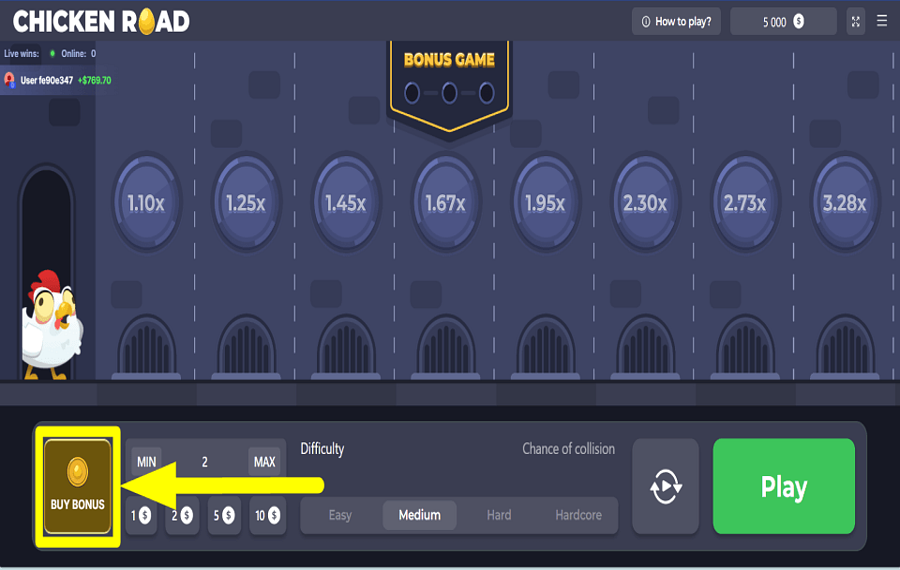
Chicken Road features a basic arcade idea. A chicken waits at the edge of a multiple-lane road, and the player starts a round after placing a stake. główne źródło tutaj The chicken moves one lane at a time. Every lane crossed boosts the multiplier displayed on screen, and the player can end the run and take the current value. Traffic is the opposite force. If a vehicle strikes the chicken, the round concludes and the stake is lost. There are no reels, rows, paylines, or ways-to-win patterns in the standard game, so the experience lies closer to a crash-style cash-out game than to a spinning slot.
The theme is specific and simple to read. The road, vehicles, and chicken animation deliver the entertainment, while the multiplier ladder drives the decision-making. Each round is brief, so the game appeals to players who favor repeated stop-or-continue options over bonus-hunting across many spins. The demo version helps players learn the pace without gambling money, but it relies on virtual credits and cannot be withdrawn. Consider the demo as a rules tutorial, not as proof of future results. The in-game information panel is the best place to confirm the exact build, controls, and limits.
The interface typically holds the stake, current multiplier, and cash-out control in view, while the road animation shows the next hazard. That layout aids quick decisions, but it also indicates a player can react too fast. A short pause before each round assists verify the stake and target. The game is a individual title rather than a full site, so site-wide payment methods, licensing, and operator bonuses are not component of its design. Assess it on the round mechanic, the published limits, and the clearness of the rules panel.